


Copper has reapproached record highs in December, with the LME three month copper price touching US$12,000 per tonne during last week’s trading session.
On the surface, the rally owed to an improved China outlook. However, if you scratch the surface, you can see something deeper is going on.

Copper is in a very challenged position.
On the one hand, it is needed more than ever. China and India are urbanising, driving the guts of demand. At the same time as AI data centres, electric cars and renewable grids are being built in rich countries – boosting demand further.
And yet…
The world is running out of cheap easily mineable copper – the type that keeps copper prices low.

For most of human history, copper was easy to find. During the Bronze Age and well beyond it, copper could be collected from surface deposits, shallow pits, or riverbeds. Even into the early industrial era, much of the world’s copper came from relatively simple deposits close to the surface.
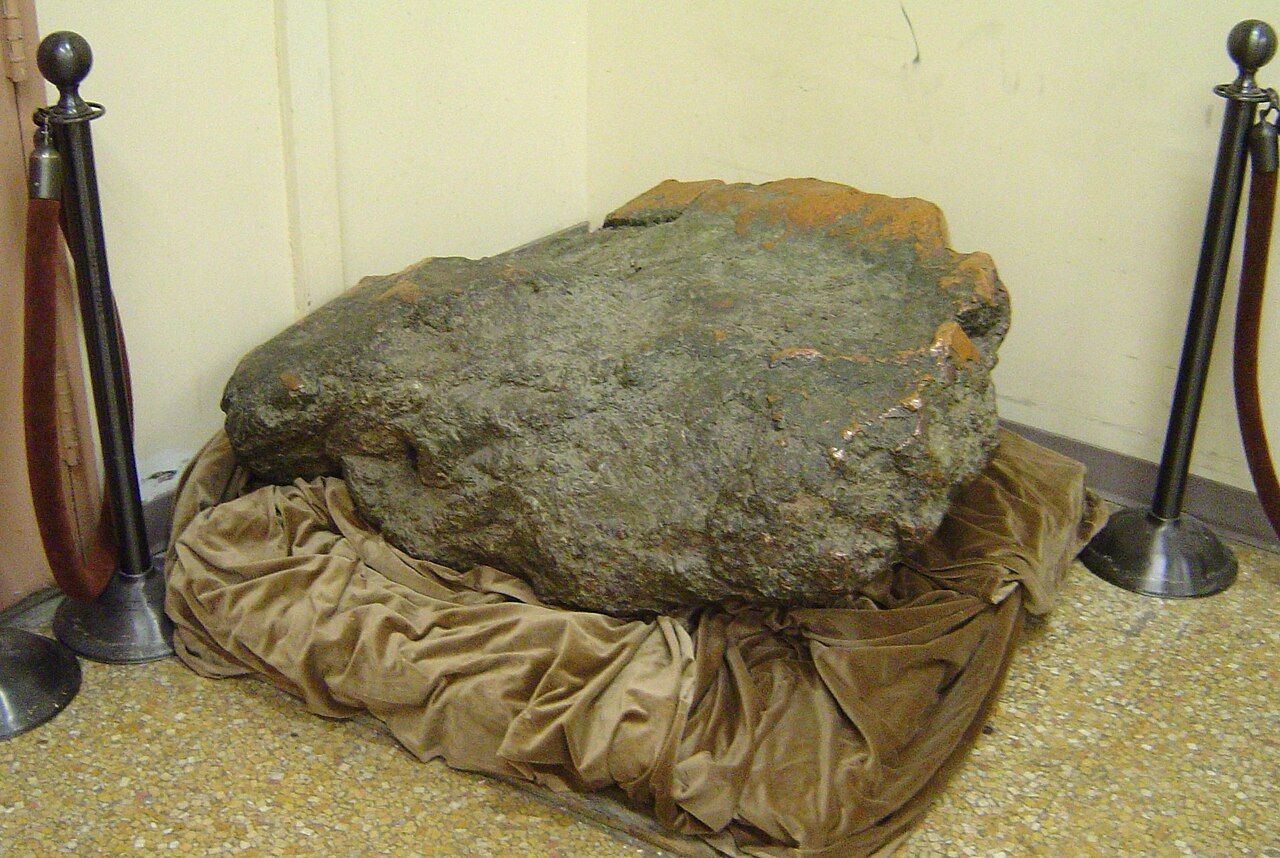
In the 19th century, the American “copper rush” was characterised by the discovery of massive boulders of solid copper (such as the famous Ontonagon Boulder in Michigan, pictured above).
That era is gone.

Over the past 150–200 years, mining has stripped out most of the highest-quality easiest-to-access copper. What remains today is in harder rock, deeper underground, more remote, and more expensive to extract. This is reflected in the graph above, which shows how much more expensive it is to mine copper these days.
Existing mines are aging
Modern copper deposits increasingly fall into two buckets. Either they are very deep underground, such as the Resolution Copper project in Arizona (owned by Rio Tinto and BHP), or in dense jungle or mountainous terrain. Ivanhoe Mines’ large copper discoveries in Central Africa are a good example here.
In both cases, the consequences are the same: more money, time, energy, and, inevitably, more pollution per tonne of copper produced.
Existing mines – often based in Chile and Peru – are not making life easier. Many of them are ageing. A well-documented trend of declining ore grades has been underway for years (graph below from BHP).

Put bluntly, there is less high-quality copper than there used to be. To compensate, miners must dig up far more material, grinding it into ever finer powder, to extract the same amount of metal. That requires more energy, more water, higher costs, and – again – more pollution.
The prospect of tight copper supply has been discussed for years. Yet investment in greenfield exploration has lagged what is needed to meet demand growth. This holds even in countries like Australia that offer some of the most generous exploration tax incentives.
Academic research has been warning about this for some time too. Gavin Mudd and researchers from Monash University have argued that copper production could face ‘peak-like’ dynamics under certain assumptions about demand growth, declining ore grades and limited new discoveries.
Young people are abandoning mining
Compounding the challenge is a quieter but equally serious problem: people.
Mining is struggling to attract young talent.

Locally, the Minerals Council of Australia says enrolments in mining engineering have dropped 75% from their peak over a decade ago. For many young Australians, mining carries social baggage linked to coal, environmental damage, and 40-degree FIFO work in the desert. At the same time, engineering graduates increasingly prefer toward software and computing roles that offer better lifestyles.
Investment options for copper
So where does this leave investors?
UBS, JP Morgan, Goldman Sachs are all forecasting higher copper prices in 2026 and 2027. This on top of the higher copper prices we’ve this month.
Higher prices, all things being equal, support miner earnings. Which might make investors gravitate to copper miners. (Copper smelting has become economically unviable outside of China.)

However, the market has known the copper story for some time. And pureplay copper majors like Ivanhoe and Antofagasta now trade on trailing 12-month PE ratios at or near 40 – helped by retail investor inflows into copper ETFs. For mining majors, PE ratios do not sustainably rise higher than that. (Unlike SaaS tech, mining is not an annuity business. Finite mine lives compress PE ratios, by and large).
Ultimately wealth creation in copper this decade will likely be in two things: discovery and tech.
New deposits - particularly high-quality ones - are going to be both valuable and necessary. Boardrooms of ASX miners have noticed how richly the market is rewarding copper discovery. And so we’re finally starting to see more copper drilling and exploration from ASX miners.
Better tech like leaching will also become invaluable. Higher recovery rates have the effect of increasing a mines’ effective life.
Another way to play the theme
Ultimately, the copper story is tied to the massive global appetite for AI hardware, electric cars, and other advanced electronics. Investors who prefer the demand side of this equation may choose to own the technology companies - like Nvidia or Apple - driving it rather than the miners supplying it.
One option is the ETFS US Technology ETF (ASX: WWWW), which provides exposure to the AI leaders whose growth is underpinning the need for copper.
Disclaimer:
This document was contributed by a representative of ETFS Shares Management Limited (AFSL No: 562766) and contains information that is general in nature only, and does not take into account your personal objectives, financial situation or needs. Before acting on any information in this document, you should consider the appropriateness of the information, having regard to your own objectives, financial situation and needs, and consider seeking independent financial, legal, tax and other relevant advice. Any investment decision should only be made after obtaining and considering the relevant Product Disclosure Statement (PDS) and Target Market Determination (TMD).