
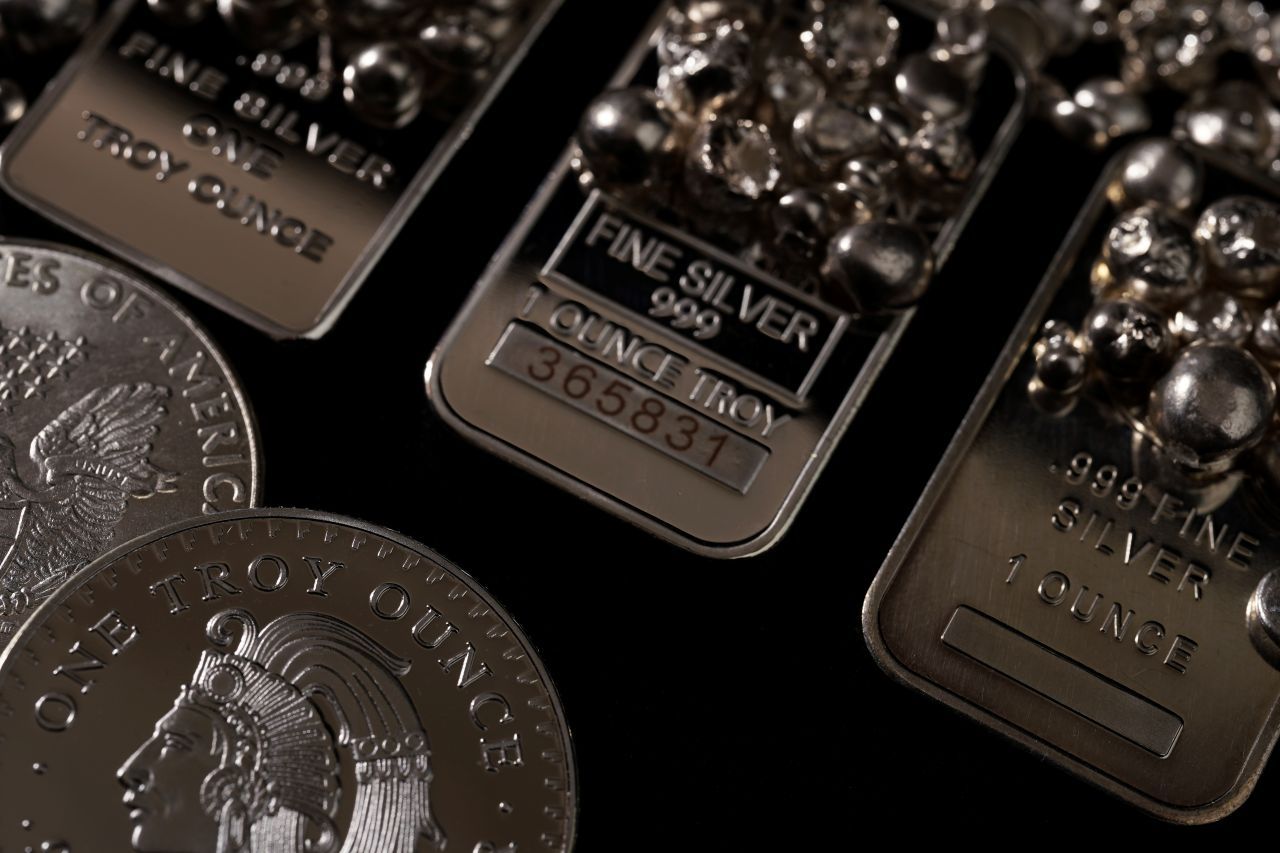


Silver is back in the headlines after another rally. Prices have surged and familiar talk of deficits is back.
For traders, it has been fun. But longer-term investors might wonder what is driving it and whether silver is now better than gold.
In our view silver’s rally is being driven by a blend of politics, retail speculation and conspiracy theories rather than demand growth. And in 2026, gold remains the better bet.
Why is silver rallying?
The rally has been triggered by unusual moves in the physical market.
Much like gold and copper, silver is stored in multiple hubs. New York and London are the big ones. When prices or borrowing costs diverge between hubs, traders shift metal between them.
These price and borrowing cost differences allow traders to make arbitrage profits. They also benefit the real economy as higher prices in some place usually signal a more desperate need.

A large part of the silver rally in recent months has owed to silver getting stuck in the US. Yet another Trump tariff threat (this time Section 232 tariffs on critical minerals like silver) meant that arbitrage traders couldn’t move silver freely.
This created a mini-squeeze, as non-US importers had to pay a premium for immediate delivery and had to compete with tariff front-running.
Crucially, this wasn’t driven by sustainable demand growth. It was a politics-induced market shock.
This game of musical chairs is beginning to wind down after Trump blinked on 14 January. Silver has been leaving US warehouses in recent weeks.
In our view, as the market continues to relax about tariffs and supply becomes more available outside the US, investors will circle back to the fact that silver’s long term investment thesis is simply weaker than gold’s.
This sets the stage for gold to outperform silver this year.
Long term, gold is much more investible than silver
Gold’s investment case starts with chemistry.
It does not oxidise, corrode or degrade. Silver does. That single difference shapes how each metal is held and valued.
In countries like India and China, buying gold jewellery is seen as an investment as much as a fashion statement. For many Indian families, it is a store of wealth that can be sold, pledged or passed down. In India alone, gold investment value surged 74% in the September quarter of 2025 to $10.2 billion, even as high prices caused jewellery volumes to fall.
Silver cannot fill that role. Its tendency to tarnish excludes it from high-end jewellery, creating less demand.
Central banks don’t buy silver
Central banks are major buyers of gold. Their purchases are large enough to move the market and are modelled by the World Gold Council. The idea that central banks vacated gold after Nixon ended the gold standard in 1971 is a myth.
In several emerging markets, gold reserves now exceed holdings of US Treasuries. They buy gold because it is a liability-free reserve asset. Chinese buying in 2021 is credited with preventing the gold price falling, despite a strong US dollar and rising interest rates (usually strong headwinds for gold) in that year.

Silver, by contrast, relies on retail investors and industrial users. And these industrial users make it crystal clear they will abandon silver when prices rise.
Here, we should note that major solar panel makers like Longi have already announced that they are ditching silver for copper, which weakens long term demand.
The byproduct supply trap
Silver bulls often point to supply deficits. But pointing to deficits often misses the bigger picture.
Roughly 75% of silver is mined primarily as a byproduct of copper, lead and zinc. Miners do not respond to silver prices by digging for more silver. What they respond to is the copper price.

That makes silver supply effectively inelastic. If copper production ramps up, the market can be flooded with silver even as demand falls. If copper demand stagnates, higher silver prices do little to increase supply.
The result is volatility which attracts speculators but repels long-term institutional capital.
Silver’s conspiracy theorists
Then there’s the silver investors themselves.
Silver is burdened with a contingent of conspiracy theorists, peddling misinformation about the banks, and JP Morgan in particular, shorting and manipulating the market.
To be clear: there is no evidence that JP Morgan and the banks are shorting and manipulating silver. Indeed, under the Volcker Rule, the short positions silver conspiracy theorists allege would be illegal and impossible to conceal. Insofar as the banks short silver at all, it is to hedge client activity or some other corresponding ‘long’.
About ETF Shares
ETF Shares is a low-cost index ETF issuer, based at the Macquarie University Incubator. We specialise in US-focussed ETFs, such as the ETFS Magnificent 7+ ETF (ASX: HUGE) and ETFS US Quality ETF (ASX: BEST)
Disclaimer:
The issuer of units in ETFS Magnificent 7+ ETF (HUGE)(ARSN: 685 356 183) and ETFS US Quality ETF (BEST)(ARSN: 685 149 464) is the responsible entity of the Fund, being ETF Shares Management Limited (ABN 77 680 639 963, AFSL: 562 766).
The product disclosure statement (PDS) and Target Market Determination (TMD) for the Funds contain all of the details of the offer of units in the Fund. Copies of the PDS and TMD are available from ETF Shares Management Limited or at www.etfshares.com.au.
The information provided in this document is general in nature only and does not take into account your personal objectives, financial situation or needs. Before acting on any information in this email, you should consider the appropriateness of the of the information having regards to your objectives, financial situation or needs and consider seeking independent financial, legal, tax and other relevant advice.
Investment in any product issued by ETFS are subject to investment risk, including possible delays in repayment and loss of income and principal invested. The value or return of an investment will fluctuate and an investor may lose some or all of their investment. Past performance is not a reliable indicator of future performance