
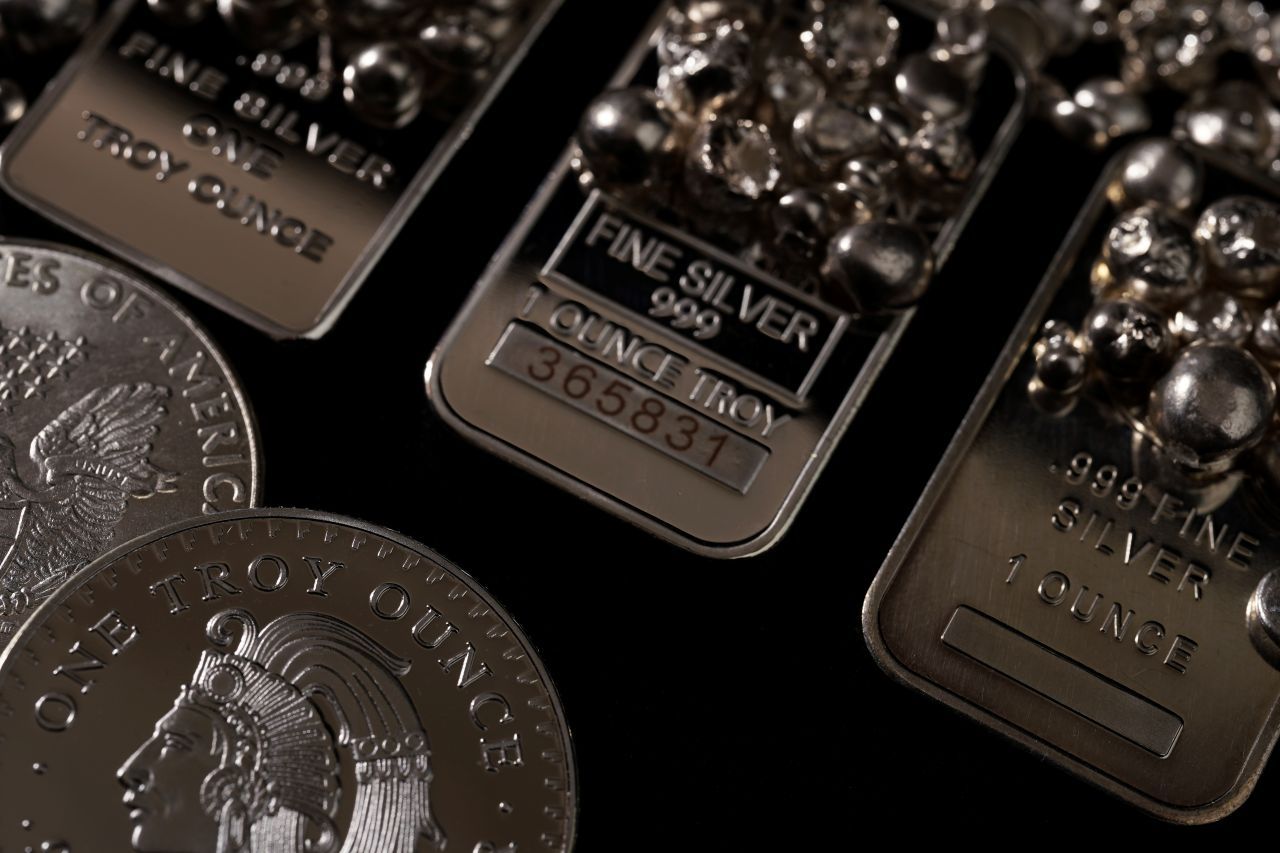


Silver had a brutal end to the week. Prices fell close to 30% from peak to trough in a violent wave of deleveraging and forced selling.
Perhaps some correction was inevitable. Options on the silver ETF (SLV) in the US had overtaken QQQ and SPY in open interest, which is utterly remarkable given the difference in float.
But when markets drop like this, it usually reflects a wide gap between the story sold to retail investors and the facts on the ground.
Silver attracts storytelling. Tales of bank manipulation, exchange frauds, and chronic supply deficits circulate freely. Much of it reads more like a movie script than market analysis.
After the latest sell-off, it is worth setting the record straight.
Misunderstanding #1 - banks are shorting silver to suppress prices
A persistent claim is that banks deliberately short silver to keep prices down, laying the groundwork for a GameStop-style squeeze. This story resurfaces whenever futures positioning data is released.
Banks do short silver futures - that part is true. The error is assuming this represents a directional view.
In practice, banks are typically acting as market makers. When hedge funds or trading firms - often their own clients - want silver exposure via futures, someone must take the other side.
Banks, however, do not want price risk. To neutralise their futures exposure, they usually buy an equivalent (or greater) amount of physical silver, often in London. This is the classic cash-and-carry trade.
Under normal conditions, this earns a modest arbitrage return. The key point is that the futures short is offset by physical holdings. There is no meaningful directional exposure and no obvious mechanism for a GameStop-style squeeze or systematic price suppression.
Misunderstanding #2 - paper silver is a fractional-reserve fraud
Another popular claim is that silver futures markets are fractionally reserved and therefore vulnerable to a short squeeze.
This argument points to the fact that the notional ounces represented by futures contracts far exceed the silver held in exchange warehouses.
That observation is broadly correct. Exchanges such as Comex do not hold enough silver to physically settle every outstanding contract at once.
But this does not imply a squeeze is likely - or even plausible.
Futures markets overwhelmingly serve speculators. While exchanges emphasise their role in hedging for industry, the vast majority of commodities futures volume comes from speculative trading, silver included.
That is why exchanges do not warehouse silver for full physical delivery: almost no one wants it. Futures traders want frictionless cash exposure, not trucks, vaulting, insurance, and security logistics.
Expecting a physical squeeze here confuses financial positioning with industrial demand. It is a category error.
Moreover, exchanges retain wide discretion to manage disorderly markets. Circuit breakers, trading halts, and rule changes give venues like Comex the ability - and the incentive - to step in long before stresses become existential.
Misunderstanding #3 - supply deficits guarantee higher prices
A third belief is that modelled silver supply deficits must eventually force prices higher. This view has been given added force by silver’s addition to critical minerals status in the US.
This type argument is common across metals. Analysts and promoters regularly publish supply-demand models purporting to show structural shortages. It is a familiar part of the pitch.
Where many of these models fall down is in treating silver as a consumable commodity - like uranium - rather than as an investment asset.
That distinction matters. Treating investment demand as consumption understates the price elasticity of supply.
Silver held in bars or ETFs is not destroyed in use. It can return to the market as prices change, with recycling further amplifying that response.
On the demand side, analysts often underestimate thrifting and substitution. When prices rise, manufacturers invest aggressively in reducing silver intensity or replacing it altogether. Solar panel manufacturers - historically heavy users - have already demonstrated substantial progress on this front.
Conclusion - gold still looks the cleaner trade in 2026
Silver is too industrial to be gold, yet too financialised to be a pure industrial metal. It has never had a clear identity.
That ambiguity -and the volatility it produces - has kept large pools of institutional capital largely on the sidelines. Central banks, pension funds, asset consultants, and family offices overwhelmingly prefer gold.
Silver’s volatility will always appeal to traders and retail investors seeking convexity. But for long-term allocators looking for stability in 2026, gold still looks like the more sensible choice.
About ETF Shares
ETF Shares is a low-cost index ETF issuer, based at the Macquarie University Incubator. We specialise in US-focused ETFs, such as the ETFS Magnificent 7+ ETF (ASX: HUGE) and ETFS US Quality ETF (ASX: BEST)
View Disclaimer:
The issuer of units in ETFS Magnificent 7+ ETF (HUGE)(ARSN: 685 356 183) and ETFS US Quality ETF (BEST)(ARSN: 685 149 464) is the responsible entity of the Fund, being ETF Shares Management Limited (ABN 77 680 639 963, AFSL: 562 766). The product disclosure statement (PDS) and Target Market Determination (TMD) for the Funds contain all of the details of the offer of units in the Fund. Copies of the PDS and TMD are available from ETF Shares Management Limited or at www.etfshares.com.au. The information provided in this document is general in nature only and does not take into account your personal objectives, financial situation or needs. Before acting on any information in this email, you should consider the appropriateness of the of the information having regards to your objectives, financial situation or needs and consider seeking independent financial, legal, tax and other relevant advice. Investment in any product issued by ETFS are subject to investment risk, including possible delays in repayment and loss of income and principal invested. The value or return of an investment will fluctuate and an investor may lose some or all of their investment. Past performance is not a reliable indicator of future performance.