
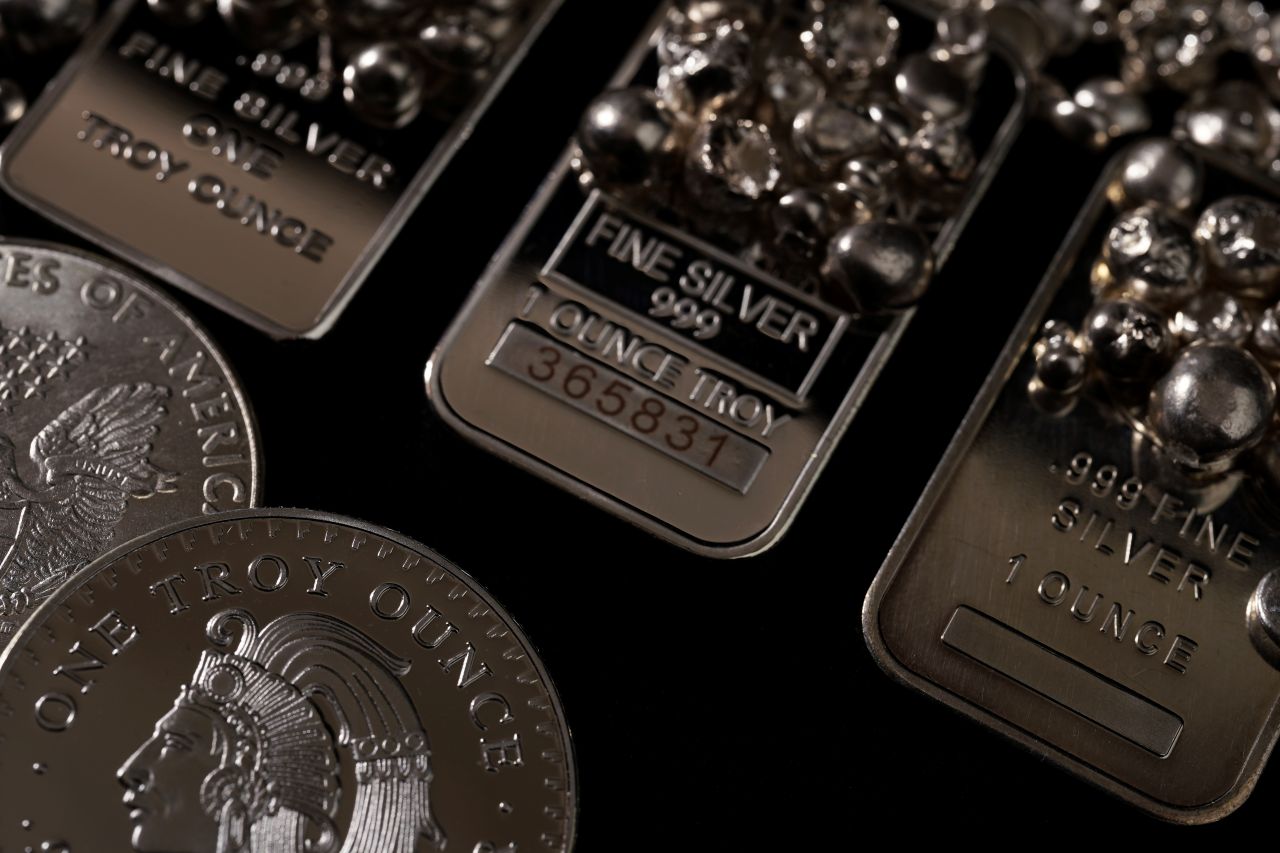


War and inflation are usually thought to be good for precious metals. Yet since the start of the US–Iran conflict, gold and silver have fallen sharply, with silver materially underperforming.
This has left many investors wondering why, and left others wondering if it is time to buy the dip.
Why is silver falling? The explanation lies in positioning.
By February, there were clear signs the rally had overshot. Speculation was high across futures and ETFs, and leverage was playing an increasingly important role in driving prices.
In relatively small markets like gold and especially silver, that kind of positioning can amplify price swings.
There were also signs of stress in the ETF market. Silver ETFs began trading at premiums to NAV, an anomaly in a structure designed to keep prices tightly aligned with the underlying metal. That only tends to happen when demand is running ahead of the market’s ability to find metal.
As interest rates pushed higher, that dynamic reversed. The cost of holding leveraged positions increased, marginal buyers were forced out, and prices corrected.
Why it may be too soon to buy the dip
With prices now meaningfully lower, the natural question is whether this is a buying opportunity.
For now, the market suggests some caution.
Trading volumes across precious metals - futures, options and ETFs - have thinned in recent months. Thin markets are fragile markets: there is less depth to absorb selling pressure, particularly after a strong multi-year rally where many participants are still sitting on profits.
Importantly, the sharpest and most attractive entry points in gold and silver have typically been accompanied by surging volumes: periods of forced selling and capitulation. That kind of activity is not yet evident.
At the same time, US 10-year Treasury yields remain elevated, supporting the US dollar. In the short term, both gold and silver tend to trade inversely to the dollar, with a weaker relationship to inflation expectations than is often assumed. That continues to act as a headwind.
Taken together, the tape suggests the correction may not be fully complete.
The silver lining
While it may be too early to buy aggressively, the underlying setup is becoming more constructive.
Speculative activity has fallen sharply in recent months. Futures positioning has been reduced across both retail and institutional investors, and silver ETFs, often the driver of marginal flows, have seen sustained outflows and no longer trade at premiums to NAV.
This matters. Silver is more sensitive to positioning than gold, given its smaller market size and more tactical investor base. When positioning is crowded, price moves can overshoot. When that positioning clears, the market tends to stabilise.
A second important shift is taking place in the physical market.
During the 2025 rally, silver lease rates spiked to extreme levels, at times reaching 30% or more. For industrial users, including solar manufacturers, borrowing silver became prohibitively expensive. Many were forced to buy metal outright in the spot market, adding to demand and amplifying the rally.
That dynamic is now reversing. Lease rates have fallen back toward more normal levels, easing pressure on industrial buyers and removing a key source of forced demand.
From correction to consolidation
The common thread across positioning, ETF flows and lease rates is that the excess has largely been cleared from the market.
That typically marks a transition.
Not from correction to immediate rally—but from correction to consolidation. Downside risk begins to diminish, even if a clear catalyst for higher prices has yet to emerge.
Silver appears to be entering that phase.
The virtue of patience
Silver is materially more investible today than it was at the start of the year. Leverage has been reduced, positioning is cleaner, and distortions are fading.
But “more investible” doesn’t yet mean compelling.
For now, the market looks to be stabilising rather than preparing for a sharp move higher. Patience is still required. But the foundations for the next leg up are starting to fall into place.